Overview
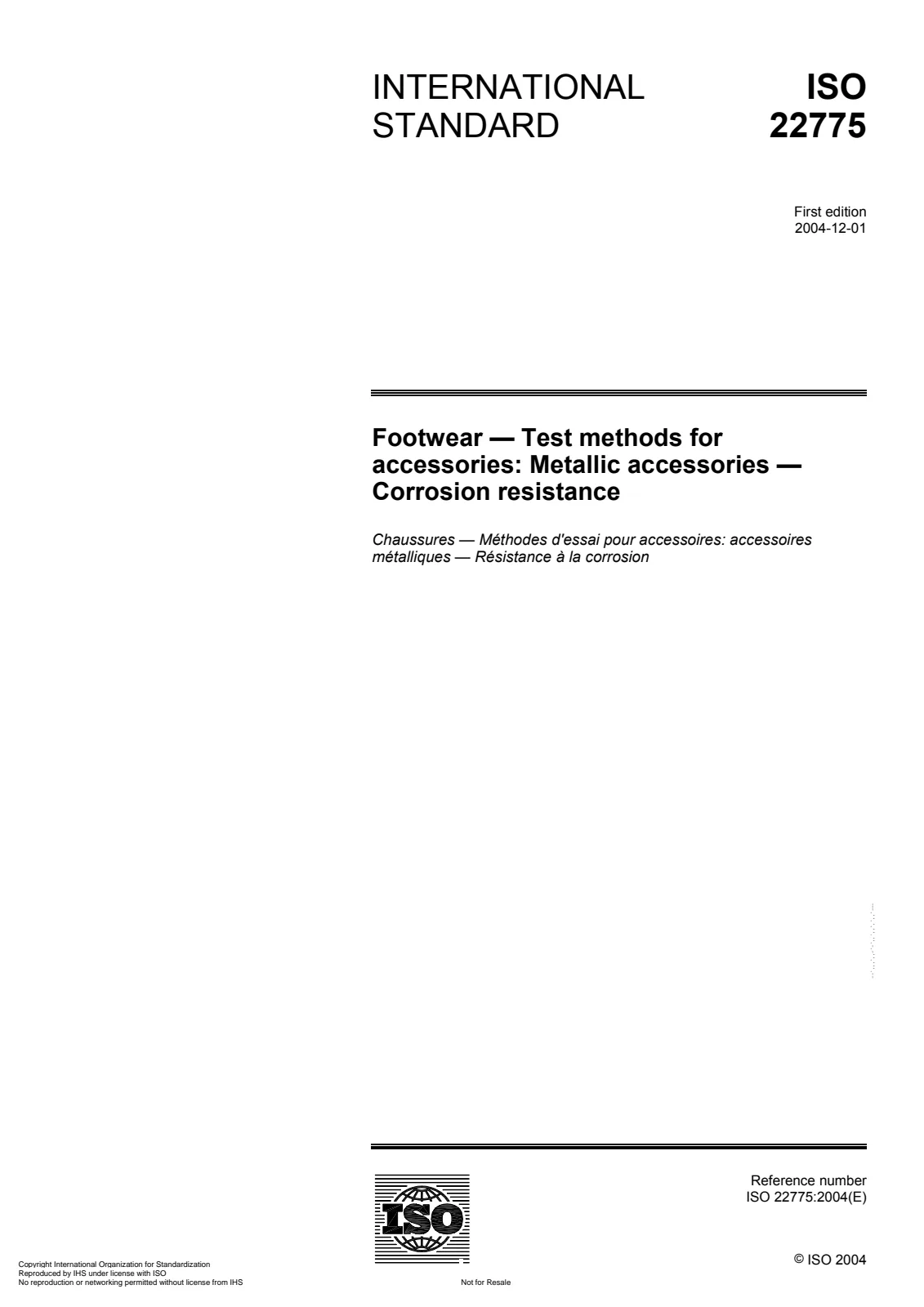
EN ISO 22775:2004 - Footwear: Test methods for accessories - Metallic accessories - Corrosion resistance describes two standardized laboratory tests to assess how metallic footwear accessories respond to atmospheric pollutants and salt exposure. It is a CEN-adopted ISO standard used across footwear and accessories manufacturing and testing in Europe.
Key topics and requirements
- Two test methods:
- Method 1 - Sulfide tarnishing: exposes a suspended test specimen to a moist atmosphere containing low concentration hydrogen sulfide (H2S) for 60 ± 5 minutes. After exposure, the specimen is visually compared to a non‑exposed reference and graded on a 1–5 scale (5 = no change, 1 = very marked change).
- Method 2 - Salt water corrosion: wraps a specimen in desized bleached cotton lawn saturated with sodium chloride solution (30 g/dm3), seals it in a polyethylene bag for 24 ± 1 hours, then rinses and compares to a reference. Corrosion and cotton staining are recorded and graded on a 1–5 scale.
- Apparatus & safety:
- Method 1 requires a hydrogen sulfide source (e.g., Kipps generator) and a sealed glass vessel; testing must be performed in a fume cupboard due to H2S toxicity.
- Method 2 requires PE bags, cotton lawn fabric, and NaCl solution.
- Specimens & assessment:
- Two specimens are required (exposed and reference). If only one component is available it may be cut into two pieces; cut edges must be sealed with epoxy for at least 24 hours.
- Visual assessment is subjective; the standard recommends multiple assessors (ideally three) and documenting observed damage in detail.
- Reporting:
- Test reports must reference EN ISO 22775, state which method was used, describe specimen composition, give the grade, note cotton staining (Method 2), list deviations, and record the test date.
Applications
- Quality control and acceptance testing for metallic footwear accessories (buckles, eyelets, studs, zips, decorative metal trims).
- Material and coating selection for suppliers evaluating corrosion resistance of metal finishes (including plated articles).
- Laboratory test methods for compliance testing, product development, and comparison of surface treatments under sulfide tarnishing and salt water exposures.
- Useful to footwear manufacturers, component suppliers, testing laboratories, and quality assurance teams seeking standardized, repeatable corrosion assessments.
Practical notes
- The tests are rapid, low-cost screening methods focused on visual appearance and staining rather than detailed electrochemical corrosion rates.
- Nickel‑plated items may discolor in Method 1; the standard notes uniform discoloration can be disregarded for some applications but should be recorded.
Related standards and committees
- Prepared by CEN/TC 309 (Footwear) in collaboration with ISO/TC 216 (Footwear). Use EN ISO 22775 when specifying test requirements for footwear metallic accessories in procurement, specifications, and conformity documentation.