Overview
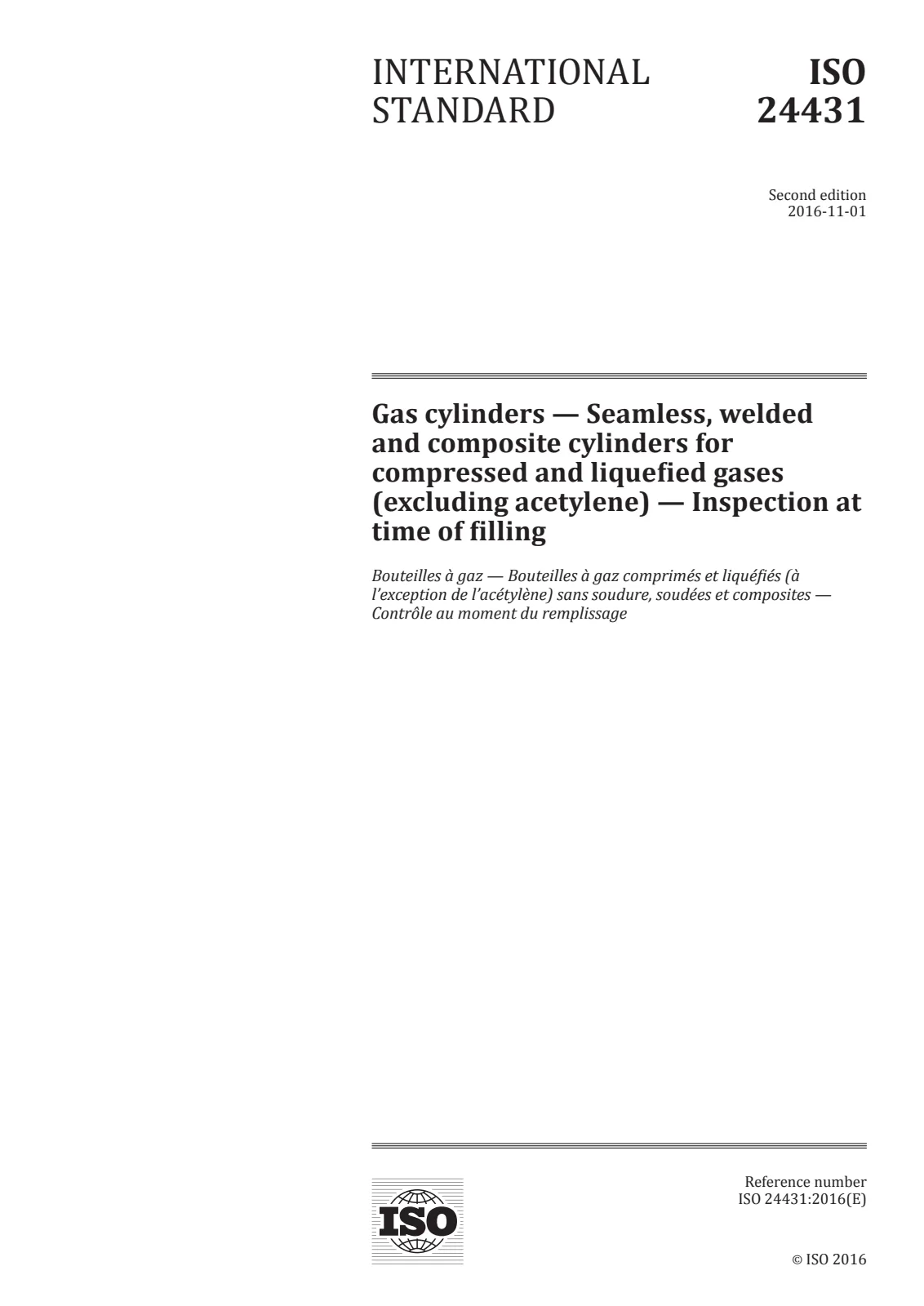
EN ISO 24431:2016 (ISO 24431:2016) - Gas cylinders: Seamless, welded and composite cylinders for compressed and liquefied gases (excluding acetylene) - Inspection at time of filling - defines the inspection requirements to be carried out when transportable gas cylinders are filled. The standard applies to Type 1 (steel or aluminium-alloy, seamless or welded) and composite cylinders (Types 2–5) with a water capacity up to 150 L (and optionally 150–450 L when filled/inspected individually). It was adopted by CEN as EN ISO 24431:2016 and is intended to support safe filling, identification and fitness-for-service of cylinders used for compressed and liquefied gases.
Key topics and requirements
- Scope and exclusions: Applies to most transportable cylinders but excludes acetylene cylinders, bundles, tubes, MEGCs and battery vehicles. May apply to LPG (see ISO 10691 for LPG-specific needs).
- Identification: Verification of cylinder ownership, markings and conformity with design standards and national regulations (e.g., test dates, stamp marking).
- Pre-filling inspection: Visual and functional checks of exterior and interior condition, coverings, permanent attachments (neckrings, footrings), cylinder tare (empty weight) and valve suitability.
- Inspection during filling: Procedures for safe filling operations and monitoring to detect unsafe conditions.
- Post-filling verification: Gas tightness tests, correct filling pressure and weight, valve protection and correct product labelling.
- Rejection criteria: Guidance for identifying cylinders that must be rejected for filling and procedures for rejected cylinders.
- Annexes and supporting procedures: Informative annexes provide a residual pressure check and an example procedure to establish correct tare (empty weight).
- Normative references: Cross-references to related ISO standards for periodic testing and marking (e.g., ISO 6406, ISO 10460, ISO 10461, ISO 11623, ISO 13769, ISO 25760).
Applications and who uses it
EN ISO 24431:2016 is used by:
- Gas filling station operators and service personnel
- Cylinder inspectors and testing laboratories
- Industrial gas suppliers and distributors
- Transportation and logistics companies handling filled cylinders
- Safety managers and compliance officers implementing filling procedures
Practical uses include developing site-specific filling procedures, training inspection staff, ensuring regulatory compliance during filling, and reducing risks associated with filling compressed or liquefied gas cylinders.
Related standards
EN ISO 24431:2016 supports safe, consistent inspections at the time of filling and should be applied alongside national regulations and the referenced ISO standards.