Overview
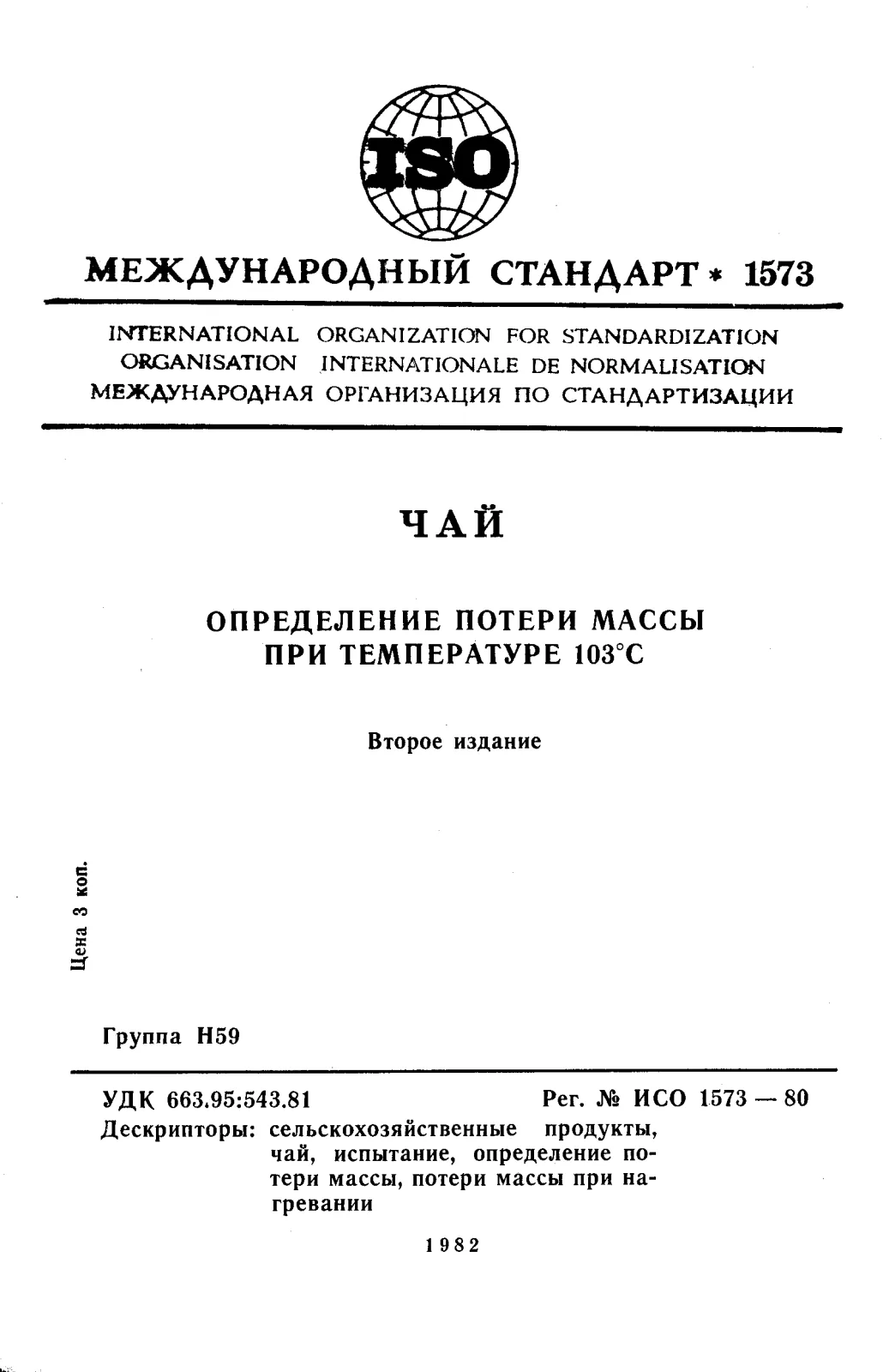
ISO 1573:1980 is an international standard established by the International Organization for Standardization (ISO) that specifies a method for determining the loss in mass of tea when heated at 103 ± 2 degrees Celsius. This measurement is crucial for assessing the moisture content in tea, which affects quality, shelf life, and processing characteristics. The procedure involves drying a test portion of tea in a controlled oven until a constant mass is achieved, ensuring accuracy and reproducibility.
Key Topics
-
Scope and Principle
The standard defines drying tea in air at 103 °C to constant mass to assess loss in mass at 103 °C, which primarily represents moisture content but may include other volatile substances.
-
Sample Preparation
Tea samples must be prepared according to ISO 1839 (Tea - Sampling) for representative and consistent results.
-
Test Method
- Weigh a test portion (~5 g) into a pre-weighed, dried weighing bottle.
- Dry the sample in an oven at 103 ± 2 °C with the lid removed for 6 hours initially, then in 1-hour increments until mass variation between consecutive weighings is less than 0.005 g.
- Cool using a desiccator before weighing to avoid moisture gain from air.
- Repeat the process if mass increases after drying to find the correct constant mass point.
-
Calculation and Expression of Results
Loss in mass is expressed as a percentage of the initial test portion mass using the formula:
[
\text{Loss in mass (%) } = \frac{m_0 - m_1}{m_0} \times 100
]
where ( m_0 ) is initial mass and ( m_1 ) is dried mass.
-
Repeatability and Accuracy
Two separate determinations must be conducted on the same sample. Results must agree within 0.3 g loss per 100 g of sample to be considered repeatable.
-
Reporting Requirements
Test reports should include method details, results, any deviations from the standard procedure, and full sample identification for traceability.
Applications