ISO/IEC 10165-4:1992/Amd 3:1998 PDF
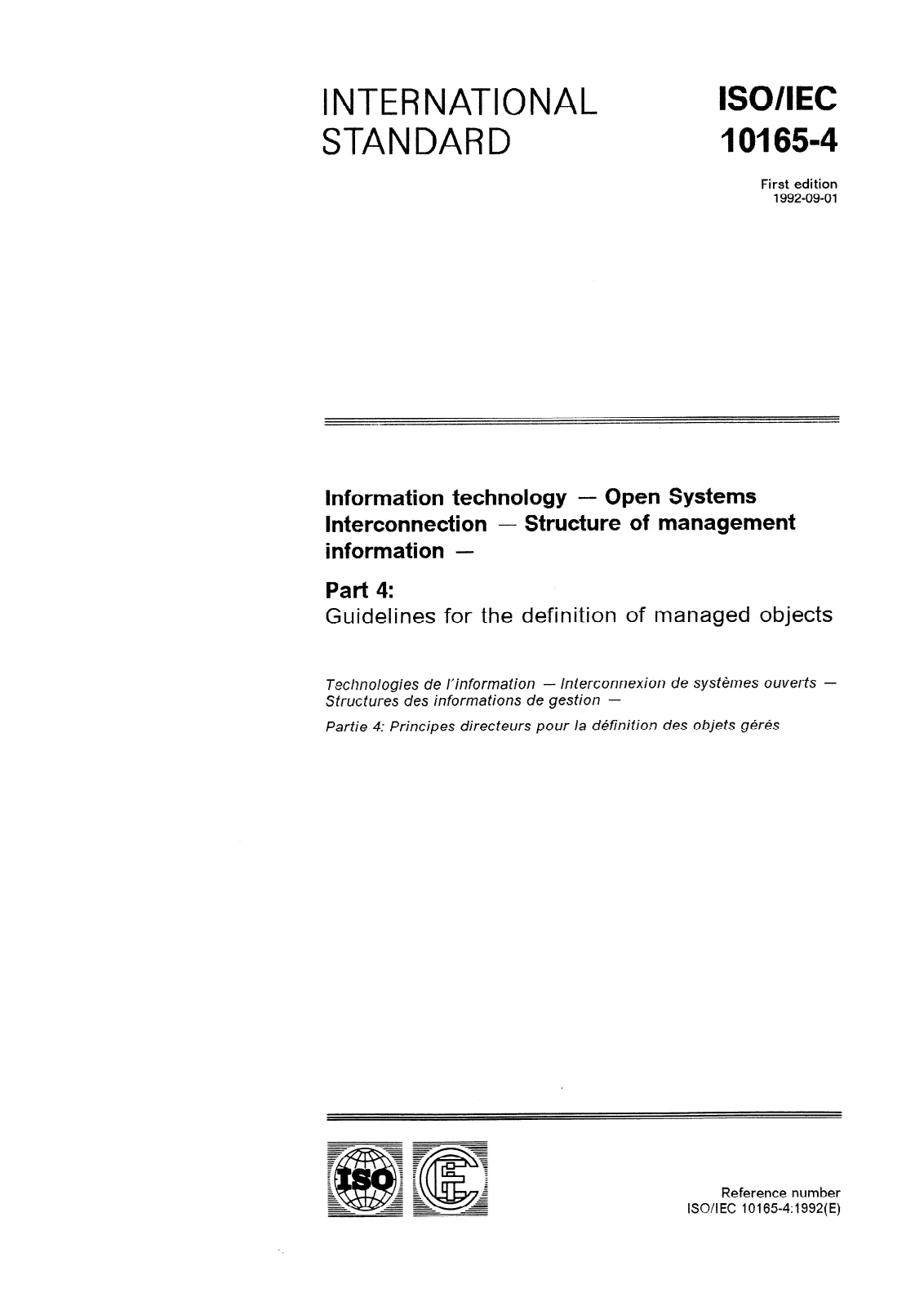
Information technology — Open Systems Interconnection — Structure of management information — Part 4: Guidelines for the definition of managed objects — Amendment 3: Guidelines for the use of Z in formalizing the behaviour of managed objects
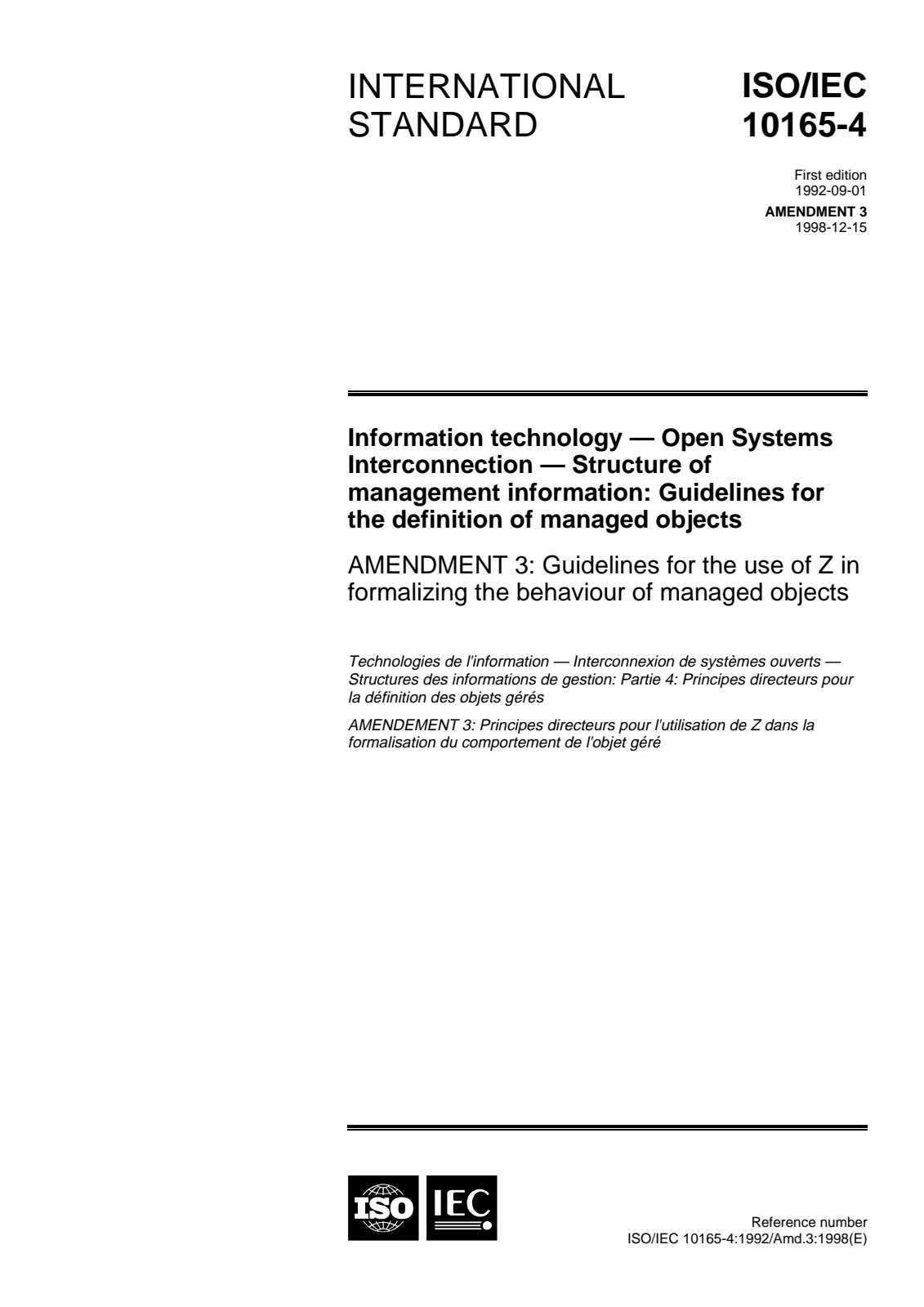 Open preview (PDF)Information technology — Open Systems Interconnection — Structure of management information — Part 4: Guidelines for the definition of managed objects — Amendment 3: Guidelines for the use of Z in formalizing the behaviour of managed objects
Title (English):
ISO/IEC 10165-4:1992/Amd 3:1998
Information technology — Open Systems Interconnection — Structure of management information — Part 4: Guidelines for the definition of managed objects — Amendment 3: Guidelines for the use of Z in formalizing the behaviour of managed objects
- Document status:
- Active
- Format:
- Electronic (PDF)
- Number of pages:
- 19
- Publication date:
- December 20, 1998
- Edition:
- ISO/IEC IS 10165 edition 1 version 1
- ICS:
- 35.100.70
Technical details
- Technical committee
- ISO/IEC JTC 1 - Information technology
- SKU
- ISO/IEC 10165-4:1992/Amd 3:1998